
Why Life Is Meaningful
At the graveside of my grandparents, Elaine and Ron, I was reminded again that we gather at moments like these because we know life is meaningful.
We do not really believe that people are merely molecules or a collection of cells moving through the universe from nothing to nothing. We know better. We grieve because people matter. We remember because their lives mattered. We give thanks because their lives were gifts from God.
My grandparents were both born in 1944. Their lives, like every human life, were given by God. That alone makes life worth honoring. Every baby born into this world carries the potential to love, laugh, serve, and enjoy God’s good creation.
And many of us received life, care, and kindness through Elaine and Ron.
They were parents and grandparents. They changed diapers, provided food, sat near bedsides when children were sick, worked long hours, and carried ordinary burdens that often go unnoticed until later. These ordinary acts of care are not small. They are reflections of God’s kindness.
I remember smaller kindnesses too. Grandpa often gave me twenty dollars when we came to visit. He also took me, as a very young boy, to the race track, which is still a fond memory. Even imperfect people cannot help but reflect something of the image of God in them.
But because God gives life, we also owe our lives to him.
That is where the Christian message becomes both sobering and hopeful. We have not used the lives God gave us as we should. We have sinned with our words, our desires, our actions, and our selfishness. This was true of my grandparents, and it is true of me. It is true of all of us.
But with God, the story never stops there.
There is hope.
God, in his mercy, sent his Son, Jesus Christ. Jesus lived perfectly where we have failed. He died sacrificially in the place of sinners, so that we could be forgiven. And he rose from the dead, offering everlasting life to all who turn from sin and trust in him.
This was Grammy’s hope.
Elaine knew she needed God’s grace. She trusted in Christ. And that trust shaped her life. My memories of Grammy and Grandpa are wrapped in the light of Grammy’s faith. She read God’s Word in front of her grandchildren. She loved sacrificially. She gave of herself for others.
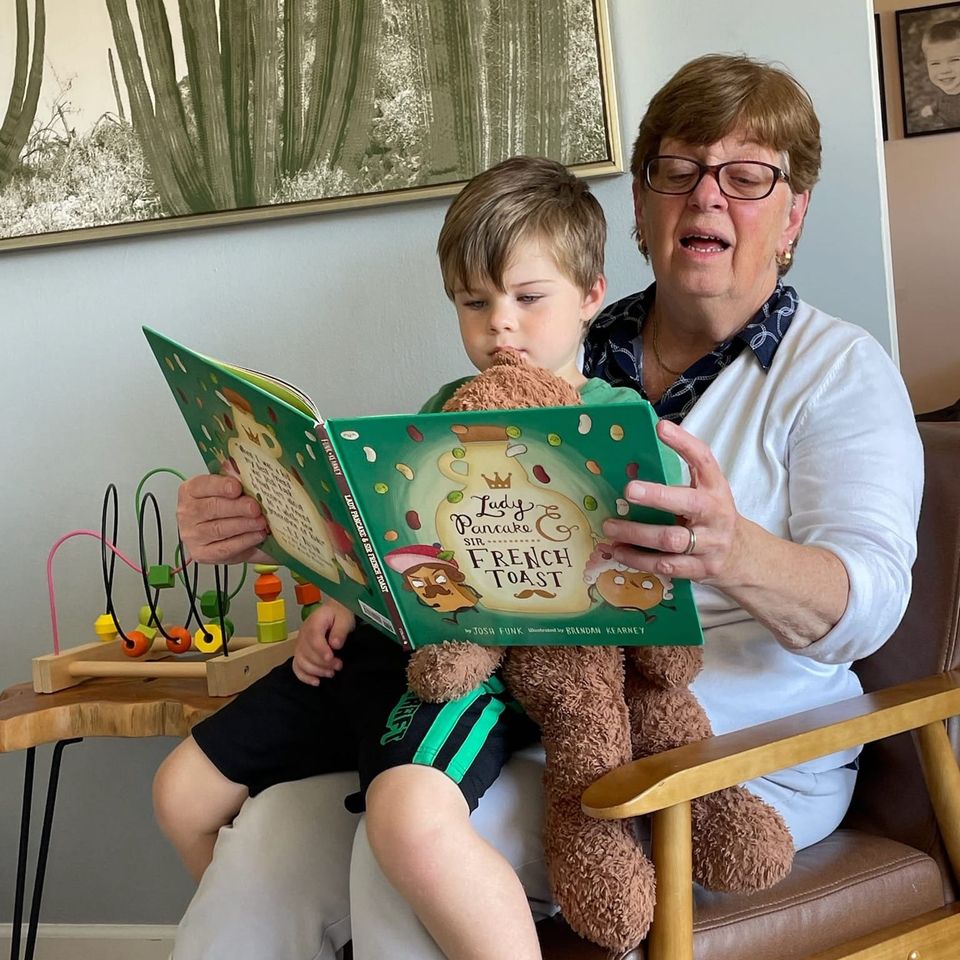
She loved to knit because she loved to give. I still have socks she made for me. She was there for us grandkids when we were learning to drive. When we were young, she would let us sleep in her bed under the heated blanket and read us the same stories in the morning. Her kindness was steady, ordinary, and beautiful.
She was not perfect. None of us are. But she repented. She trusted her Savior. She made things right with God and with others. That is her lasting legacy.
The Bible gives Christians real comfort in grief:
“Brothers and sisters, we do not want you to be uninformed about those who sleep in death, so that you do not grieve like the rest of mankind, who have no hope. For we believe that Jesus died and rose again…”
—1 Thessalonians 4:13–14
Christians do grieve. Death is painful. But we do not grieve as those without hope. Because Jesus rose from the dead, those who belong to him will also rise.
That hope is not only for the future. It begins now. Jesus changes hearts now. He teaches us to love, serve, forgive, and give ourselves for the good of others.
As I think about Grammy’s life, I am reminded of the kind of people we are praying God will raise up in Zambia as well: people transformed by Christ, shaped by Scripture, and ready to serve others with humility and love.
This is why our work matters. Training leaders for the church is not just about education. It is about helping men and women know Christ, trust his Word, and live lives that reflect his grace to families, churches, and communities.
At the graveside, I thanked God for the lives of Elaine and Ron. God showed us kindness through them.
And as we continue toward Zambia, I am asking God to use our lives in the same way: as instruments of his kindness, so that others may know the hope that Grammy had—the true and living hope found only in Jesus Christ.